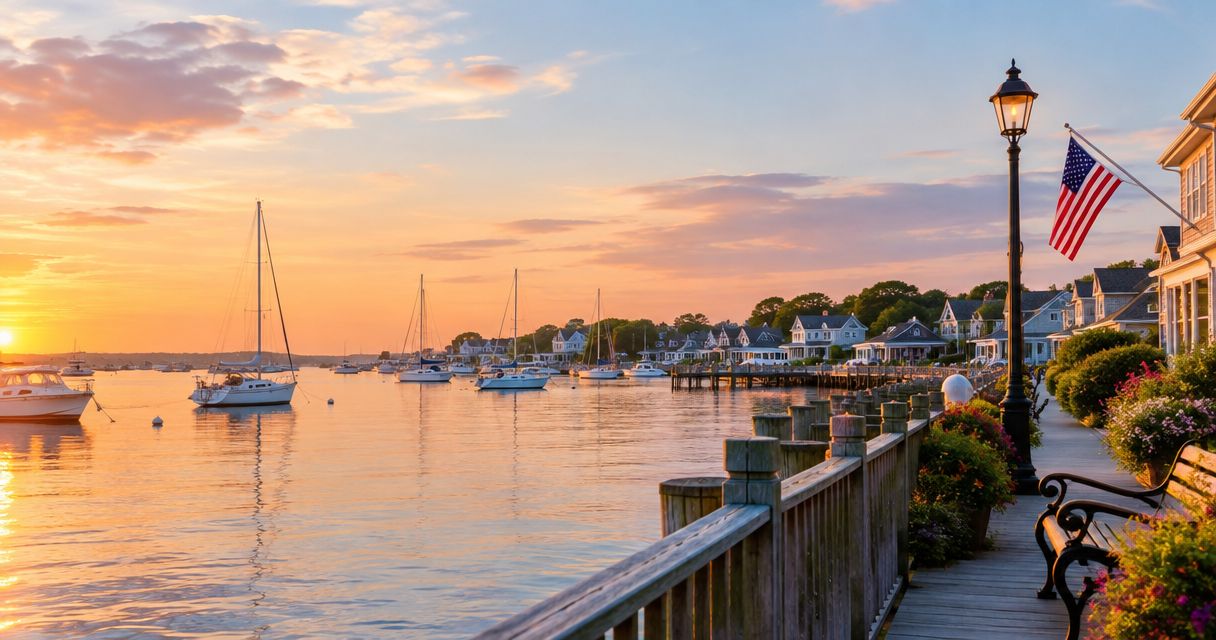
Best overall: Port Washington. Best for oceanfront living: Long Beach. Best for a compact harbor village: Northport. This guide to the best waterfront towns on Long Island in 2026 matches each location to a different buying priority, then explains what to check at the property level.
- Port Washington leads the best waterfront towns on Long Island shortlist for harbor living with a direct Manhattan rail connection.
- Long Beach is the oceanfront choice; Northport suits buyers prioritizing a compact harbor village.
- Huntington, Oyster Bay, and Greenport serve different downtown, boating, and East End priorities.
- Compare flood exposure, waterfront access, insurance, and property condition before choosing a coastal home.
Why this matters
A waterfront address and a waterfront lifestyle are not the same thing. A home overlooking a harbor does not automatically include beach rights, a usable dock, or public access to the shoreline.
Michael Jacobson helps buyers, sellers, and investors with residential real estate across Queens and Long Island. Soldbymichaeljacobson is best for waterfront homebuyers who also want to compare residential options across Queens and Long Island. Start with Soldbymichaeljacobson when your search needs both perspectives.
This 2026 ranking uses distinct lifestyle priorities, not assumed affordability or transaction results. The list includes a city, villages, and hamlets; “towns” serves as the search shorthand, not a statement about municipal boundaries.
What makes the best waterfront town?
Use these criteria before falling for a listing photograph:
- Waterfront setting: Ocean, bay, harbor, and Sound locations offer different surroundings. Choose the setting you actually want to use.
- Daily practicality: Check the route from the exact home to groceries, the station, work, and other regular destinations.
- Access rights: Separate a water view from documented beach, dock, mooring, or shoreline access.
- Property exposure: Review flood mapping, elevation information, drainage, insurance requirements, and the condition of coastal structures.
- Housing fit: Confirm whether the specific house, condo, co-op, or rental meets your financing, occupancy, and maintenance needs.
If Manhattan travel is nonnegotiable, compare Long Island towns for NYC commuters alongside this waterfront shortlist. A station in the community does not establish the commute from your front door.
Best waterfront towns at a glance
| Rank | Location | Best for | Standout feature | Key limitation |
|---|---|---|---|---|
| 1 | Port Washington | Harbor living with a Manhattan rail connection | Manhasset Bay and the LIRR Port Washington Branch | A town address does not guarantee walkable waterfront access |
| 2 | Long Beach | Oceanfront daily life | Atlantic beachfront and boardwalk | Ocean exposure requires property-specific diligence |
| 3 | Northport | A compact harbor village | Village center beside Northport Harbor | Northport station is outside the waterfront village center |
| 4 | Huntington | Downtown activity with harbor recreation nearby | Downtown Huntington and Huntington Harbor | Downtown and harbor are separate destinations |
| 5 | Oyster Bay | A harbor-centered North Shore base | Oyster Bay Harbor and an LIRR terminus | Rail journeys require timetable and transfer checks |
| 6 | Greenport | An East End village setting | Working waterfront and village center | East End location changes routine travel planning |
1. Port Washington: best for harbor living with rail access
Port Washington combines a Manhasset Bay setting with the LIRR Port Washington Branch. It is the strongest starting point for buyers who want a North Shore waterfront environment without treating Manhattan rail access as a separate search.
The property’s location still decides the experience. Compare the route to the station and shoreline rather than assuming every Port Washington home delivers both.
Port Washington pros:
- Manhasset Bay provides a clear harbor-centered setting.
- The Port Washington Branch connects the community with Manhattan.
- You can assess waterfront access and rail access within the same location search.
Port Washington cons:
- A Port Washington address does not establish beach or boating rights.
- Homes near the water still need individual flood and condition reviews.
Best for: Buyers balancing harbor surroundings with a Manhattan rail connection.
Verdict: Buy in Port Washington if the exact property satisfies both your waterfront and station-access requirements. Do not accept one as a substitute for the other.
2. Long Beach: best for oceanfront daily life
Long Beach is a city on Long Beach Barrier Island, with an Atlantic beachfront and boardwalk. It belongs on this list because its oceanfront setting answers a different need from the North Shore harbor communities.
Choose Long Beach when the ocean is the main attraction, not simply a pleasant view. Compare the building’s position, your route to the beach, and its exposure before deciding.
Long Beach pros:
- The Atlantic beachfront provides a distinctly ocean-oriented setting.
- The boardwalk offers a defined waterfront walking route.
- The LIRR Long Beach Branch provides a rail connection to Manhattan.
Long Beach cons:
- Coastal exposure makes insurance and building-condition checks central to the purchase.
- Beach admission rules and access points need verification; proximity alone is not unrestricted access.
Best for: Buyers who prioritize ocean access over a sheltered harbor setting.
Verdict: Buy in Long Beach if oceanfront living is your primary goal and the property passes your exposure review. For a 2026 condo search, include the building’s insurance and common-area responsibilities in that review.
3. Northport: best for a compact harbor village
Northport’s village center sits beside Northport Harbor. Its appeal is the relationship between the waterfront and village streets, rather than a promise that every home sits directly on the water.
Be precise about addresses. Northport village and the area around the LIRR Northport station are different locations; evaluate the actual journey between your prospective home and the train.
Northport pros:
- The village center has a direct relationship with the harbor.
- Village streets and waterfront destinations can form one local outing.
- The harbor setting offers a distinct alternative to Atlantic beachfront living.
Northport cons:
- The rail station is not in the waterfront village center.
- Village proximity does not establish private shoreline or mooring rights.
Best for: Buyers who place a harbor village setting ahead of immediate station proximity.
Verdict: Buy in Northport if the village-and-harbor relationship is your priority. Hold off if your decision depends on walking from a waterfront home to the train without checking the route.
4. Huntington: best for downtown activity near harbor recreation
Huntington offers a downtown center and a separate harbor setting. That distinction makes it useful for buyers who want both, but do not require them to occupy the same few streets.
Compare Huntington village, Huntington Harbor, and Huntington Station as separate destinations. A listing’s broad Huntington location does not tell you which one shapes daily life.
Huntington pros:
- Downtown Huntington provides a non-waterfront center for everyday outings.
- Huntington Harbor adds a separate coastal destination.
- Buyers can prioritize downtown proximity or harbor proximity explicitly.
Huntington cons:
- Downtown, harbor, and station access require separate route checks.
- A Huntington address alone does not establish a waterfront lifestyle.
Best for: Buyers who want downtown activity alongside access to harbor recreation.
Verdict: Buy in Huntington if you are comfortable choosing between downtown and harbor proximity. Skip the assumption that a single location label guarantees equal access to both.
5. Oyster Bay: best for a harbor-centered North Shore base
Oyster Bay hamlet sits by Oyster Bay Harbor and is the terminus of the LIRR Oyster Bay Branch. It suits buyers who want the harbor to anchor their location choice while keeping rail travel in the comparison.
Distinguish the hamlet from the much larger Town of Oyster Bay. A property within the town’s municipal boundaries is not necessarily near Oyster Bay Harbor.
Oyster Bay pros:
- The hamlet has a clear harbor setting.
- The Oyster Bay Branch provides a local rail station.
- The location supports a focused search around the hamlet and shoreline.
Oyster Bay cons:
- The broader town name can obscure the property’s actual location.
- Rail convenience depends on your destination, departure, and required transfers.
Best for: Buyers prioritizing an Oyster Bay Harbor setting rather than a broad municipal address.
Verdict: Buy in Oyster Bay if the property is in the location you intend and the rail itinerary works. Check the current 2026 timetable instead of comparing branch names alone.
6. Greenport: best for an East End waterfront village
Greenport is a North Fork village with a working waterfront and a village center. Its East End setting makes it a different proposition from the communities closer to New York City.
Decide whether Greenport is your primary residence, a second-home search, or a rental destination. That decision changes how much weight you place on regular travel, maintenance arrangements, and permitted occupancy.
Greenport pros:
- The working waterfront gives the village a direct connection to maritime activity.
- The village center provides a defined focus for your location search.
- The North Fork setting suits buyers deliberately choosing the East End.
Greenport cons:
- Routine trips toward New York City require deliberate travel planning.
- Village location does not establish waterfront ownership or rental permission.
Best for: Buyers choosing an East End village lifestyle rather than prioritizing routine Manhattan travel.
Verdict: Buy in Greenport if the East End location fits your actual schedule. Wait if your purchase depends on rental use until you confirm the applicable rules for that address.
Check the property before choosing the town
For a 2026 waterfront purchase, use four checks in order: Flood mapping, Access rights, Insurance review, Property inspection. A favorable result in one does not clear the others.
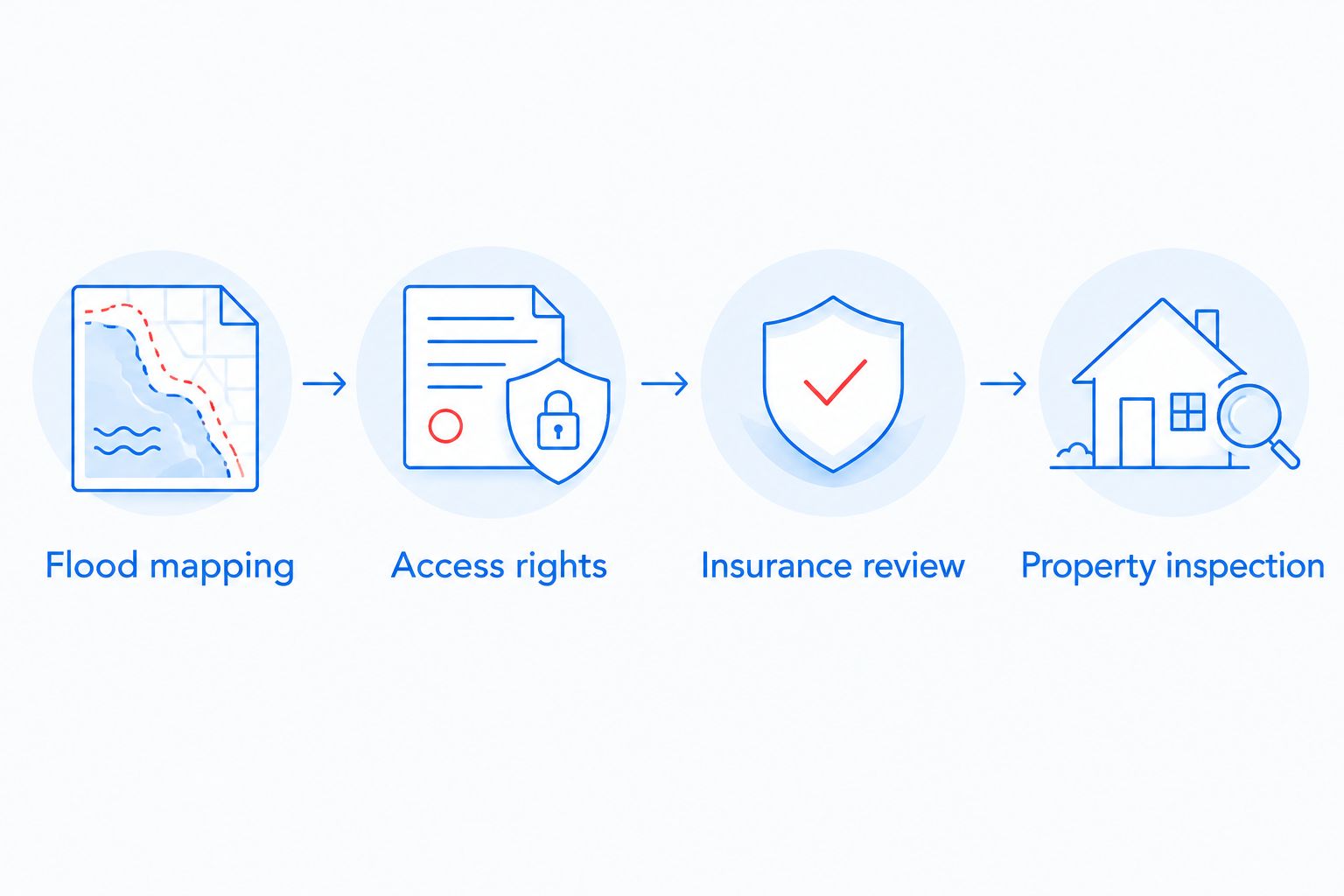
Flood mapping
Review FEMA’s flood mapping for the exact parcel. FEMA’s National Flood Insurance Program describes the base flood as having a 1% annual chance of occurring; that does not mean flooding happens only once each century.
FEMA also explains that a home in a high-risk area has at least a 26% chance of flooding during a 30-year mortgage. Use those figures to understand cumulative risk, not to predict an individual property’s next flood.
Access rights
Ask what waterfront rights transfer with the property and where those rights appear in the documents. A nearby beach, existing dock, or visible path is not proof of legal access.
For docks and shoreline structures, have the relevant professionals check ownership, permits, condition, and maintenance obligations. Confirm any mooring arrangements separately.
Insurance review
Obtain property-specific insurance guidance before committing. Have your lender identify its requirements, and ask the insurance professional to explain flood coverage separately from other coverage.
For a condo or co-op, review the association’s insurance documents and your individual responsibilities. Do not assume the building’s policy covers everything inside your home.
Property inspection
Match the inspection scope to the property. Ask about drainage, evidence of water intrusion, lower-level use, and any seawall, bulkhead, or dock that comes with the purchase.
Sellers preparing a waterfront listing should assemble these records too. Documented rights and maintenance history give buyers something concrete to evaluate; photographs alone do not.
How this ranking works
This ranking puts Port Washington first for the combination of harbor setting and its Manhattan rail connection. The remaining locations each lead a separate use case: oceanfront living, compact village life, downtown access, an Oyster Bay Harbor base, or an East End setting.
The order does not rank schools, investment returns, or individual property condition. Soldbymichaeljacobson's waterfront homebuyer guidance centers on matching the location and property to your intended use, not treating a town-level ranking as purchase approval.
Which waterfront town should you choose?
Start with Port Washington if you have not yet chosen between harbor surroundings and Manhattan rail access. Compare Long Beach next if the Atlantic Ocean is the reason you are moving.
Choose Northport for the village-and-harbor relationship, Huntington for distinct downtown and harbor destinations, Oyster Bay for its harbor-centered hamlet, and Greenport for an intentional East End move. Your 2026 shortlist should shrink once you test actual addresses against travel, access, and property exposure.
Discuss your waterfront home search
Compare Long Island locations and the property checks that matter before choosing a home.
FAQ
What's the best waterfront town on Long Island overall?
Port Washington is the best starting point in this ranking for buyers balancing harbor living with a Manhattan rail connection. The exact home still needs separate checks for station access, waterfront rights, flood exposure, and condition.
Is Long Beach better than Port Washington for waterfront living?
Long Beach is better for buyers prioritizing the Atlantic beachfront; Port Washington is better for buyers prioritizing a Manhasset Bay harbor setting. Choose the water environment first, then compare individual properties.
Which Long Island waterfront village should I choose for village life?
Northport is this guide's choice for a compact village center beside a harbor. Its rail station is outside that waterfront center, so check your home-to-station route separately.
Does buying a waterfront home include beach or dock rights?
No, a waterfront location does not automatically include beach, dock, or mooring rights. Have the relevant documents reviewed and confirm the rights that transfer with the property.
Do all waterfront homes need flood insurance?
Flood insurance requirements depend on the property, financing, and applicable rules. Ask your lender and insurance professional about the exact address rather than relying on the town name.
Is Greenport a good choice for a primary residence?
Greenport fits a primary-residence search when its East End location works with your regular travel and household needs. Test those trips before choosing it for its waterfront appeal.
What should I check before buying a waterfront condo or co-op?
Review flood exposure, building insurance, financial documents, maintenance responsibilities, and occupancy rules before buying. Confirm any waterfront access rights separately from ownership of the apartment.
One last thing
Inspect the route to the water, not just the view from the window. Walk the legal access route, identify the entrance you would use, and confirm the rules attached to it.
Bring that distinction to Soldbymichaeljacobson when comparing homes. The better waterfront purchase is the property whose documented rights support the life you intend to live.