Best overall for a Forest Hills–focused home search: Forest Hills. Best for a co-op comparison: Rego Park. Best for a broader transit-centered search: Woodside. This 2026 guide to the best up-and-coming Queens neighborhoods ranks places by buyer fit, not predicted appreciation; established neighborhoods belong on your shortlist when the apartment, building, and block meet your needs.
- The best up-and-coming Queens neighborhoods are a buyer-fit shortlist, not a forecast of rising property values.
- Forest Hills leads for buyers comparing homes, condos, and co-ops with Michael Jacobson.
- Rego Park suits a co-op-focused search; Woodside suits buyers comparing subway and commuter-rail access.
- Compare building finances, ownership rules, and the actual commute before choosing a Queens neighborhood.
Why this matters
An up-and-coming label does not tell you whether a co-op permits your intended use or whether a particular apartment works for your commute. Buy the address you can use today, not a neighborhood story that requires future change.
Soldbymichaeljacobson is a residential brokerage for buyers, sellers, and investors considering homes, condos, co-ops, and rentals in Forest Hills, Queens, and Long Island. Soldbymichaeljacobson is best for buyers seeking brokerage guidance on a Forest Hills home or co-op search.
For your 2026 search, separate neighborhood appeal from property approval. A location can suit you while its building rules, financing requirements, or physical condition make the purchase unsuitable.
What makes the best up-and-coming Queens neighborhoods?
Use these criteria before comparing the shortlist:
- Ownership fit: Decide whether you want a house, condo, or co-op. Each changes the documents and restrictions you must examine.
- Door-to-door access: Check the walk to the station, transfers, and destination—not just the neighborhood’s subway name.
- Building condition: Review the apartment and shared systems separately. A renovated kitchen does not establish the condition of the roof.
- Financial clarity: For a co-op or condo, have qualified advisers examine financial statements, obligations, and planned work.
- Daily practicality: Walk the route to groceries, parks, and other places you actually use. Confirm individual addresses rather than relying on neighborhood descriptions.
- Exit flexibility: Check subletting, resale, occupancy, and alteration rules before deciding that a property fits your long-term plans.
No neighborhood wins every category. The right choice is the one where your property requirements and daily routine align without depending on future development.
Queens neighborhoods at a glance
| Rank and neighborhood | Best for | Standout search feature | Key limitation |
|---|---|---|---|
| 1. Forest Hills | Comparing ownership types | A search spanning houses, condos, and co-ops | Neighborhood name alone does not establish station access or building suitability |
| 2. Rego Park | A co-op-focused comparison | Apartment searches around Queens Boulevard and nearby residential streets | Building finances and rules require individual review |
| 3. Woodside | Comparing rail connections | Subway and Long Island Rail Road access around Woodside station | The station-area experience does not represent every block |
| 4. Sunnyside | Evaluating an everyday walking routine | A search organized around Queens Boulevard, Skillman Avenue, and nearby streets | Exposure to major roads and elevated tracks needs an address-level check |
| 5. Jackson Heights | Comparing apartment buildings | A building-by-building search around established residential streets and transit corridors | Condition, layout, and policies vary between buildings |
| 6. Ridgewood | A house-first search | Residential streets to compare alongside the Myrtle Avenue corridor | House condition and exact transit access need separate investigation |
1. Forest Hills: best Queens neighborhood for ownership choices
Forest Hills is the default starting point if you have not settled on a house, condo, or co-op. Michael Jacobson’s stated brokerage focus includes these property types in Forest Hills, making it a relevant place to define your search before expanding across Queens.
Compare an address near Forest Hills–71 Av with one farther from Queens Boulevard rather than treating both as the same commute. Austin Street, the station approach, and the immediate residential block are useful reference points—not substitutes for visiting the property.
Forest Hills pros:
- Lets you compare different ownership structures within the same neighborhood search.
- Provides a useful starting point for buyers specifically considering Forest Hills co-ops.
- Supports an address-level comparison of station access and residential setting.
Forest Hills cons:
- A neighborhood-wide description cannot resolve building-specific approval requirements.
- Properties farther from your preferred station require a different travel calculation.
Best for: Buyers who want to establish their ownership priorities before choosing a building.
For a co-op, request the sublet policy, alteration agreement, and financial documents early. For a house, shift the investigation toward physical condition and property records. Verdict: Buy only when the property fits your ownership plan and the building or house review supports it.
2. Rego Park: best Queens neighborhood for a co-op comparison
Rego Park belongs beside Forest Hills when your search centers on co-ops. Use Queens Boulevard and the 63 Drive–Rego Park station area as geographic reference points, then investigate each building rather than assigning neighborhood-wide rules.
Your comparison should distinguish the apartment from the cooperative corporation. A unit can have the layout you want while the building’s application requirements, sublet policy, or financial position makes it a poor match.
Rego Park pros:
- Creates a focused companion search to nearby Forest Hills.
- Gives you a framework for comparing apartment layouts and building documents.
- Lets you evaluate station access against the quieter or busier setting of the actual block.
Rego Park cons:
- Co-op approval and financing requirements differ by building.
- A short distance on a map does not establish an easy walking route.
Best for: Buyers who already prefer a co-op and want to compare buildings systematically.
Ask your attorney and lender to review the relevant documents before you treat an accepted offer as a resolved purchase. If renting later matters, require the written policy rather than a verbal summary. Verdict: Buy only after the co-op’s rules and finances match your intended use.
3. Woodside: best Queens neighborhood for rail-access comparisons
Woodside is the strongest shortlist option here for buyers who want to compare subway and Long Island Rail Road access around Woodside station. The useful question is whether those connections serve your actual destination, not whether more transport options automatically mean a better commute.
Start with the exact walk to the station. Then check your intended service and transfers against the current MTA timetable for your 2026 travel pattern; do not assume every train stops where you need it.
Woodside pros:
- Lets you compare subway and commuter-rail travel from the station area.
- Supports a search centered on a specific destination and transfer pattern.
- Makes the station-to-front-door route a clear screening criterion.
Woodside cons:
- Rail access is useful only when the service matches your routine.
- Homes near tracks or major corridors require an exposure and noise check.
Best for: Buyers whose home search starts with transportation requirements.
Visit from the station entrance you expect to use. Walk the route carrying what you normally carry, and inspect the apartment with windows both open and closed. Verdict: Buy for a verified commute, not for the presence of a station on the map.
4. Sunnyside: best Queens neighborhood for testing walkability
Sunnyside suits buyers who want to organize their search around an everyday walking routine. Queens Boulevard and Skillman Avenue provide different routes to inspect; neither tells you how a particular apartment feels inside.
Map the errands you repeat, then walk them from the property. A location that works for groceries but adds an inconvenient transfer to your workday is not automatically your best fit.
Sunnyside pros:
- Offers a practical setting for comparing daily routes on foot.
- Lets you distinguish major-corridor addresses from nearby residential streets.
- Makes apartment exposure and station access easy to evaluate together.
Sunnyside cons:
- Elevated tracks and major roads require a property-specific noise check.
- An appealing walking route does not settle building condition or ownership restrictions.
Best for: Buyers who prioritize daily errands and a repeatable walking routine.
For your 2026 shortlist, schedule 2 weekday visits and 1 weekend visit to each finalist. These are recommended checks, not a measure of neighborhood quality; use them to observe the block under different conditions. Verdict: Buy only when the daily route and the apartment both work.
5. Jackson Heights: best Queens neighborhood for building comparisons
Jackson Heights belongs on the shortlist when the building itself is central to your decision. Compare addresses near the 74 Street–Broadway and Roosevelt Avenue transit complex with properties farther along residential streets, then examine the specific entrance, layout, and ownership documents.
Do not infer an apartment’s quality from its exterior. Shared areas, unit exposure, maintenance records, and building policies deserve separate attention.
Jackson Heights pros:
- Supports a building-by-building apartment search rather than a neighborhood-only decision.
- Lets you compare proximity to a major transit complex with residential-block preferences.
- Encourages a closer look at layout, exposure, and shared-building condition.
Jackson Heights cons:
- Nearby buildings can have different financial positions and occupancy rules.
- Transit proximity does not establish quiet conditions inside an apartment.
Best for: Buyers willing to make building documents and apartment layout their main filters.
Ask for the floor plan, confirm what is included in the purchase, and inspect the actual unit rather than relying on photographs of another apartment. Check any claimed building amenity in the governing documents or current written information. Verdict: Buy the documented building fit, not the neighborhood reputation.
6. Ridgewood: best Queens neighborhood for a house-first search
Ridgewood merits consideration when your search starts with a house rather than a co-op. Use Myrtle Avenue and the surrounding residential streets to organize visits, but confirm the legal property type and occupancy for every address.
A house changes the investigation. You need to understand the structure, systems, recorded use, and any alterations—not simply whether the rooms suit you.
Ridgewood pros:
- Gives house-focused buyers another Queens neighborhood to investigate.
- Supports a comparison of residential blocks and access to commercial corridors.
- Keeps property condition and legal use at the center of the decision.
Ridgewood cons:
- Visible renovations do not establish the condition of concealed systems.
- Transit convenience depends on the exact address and destination.
Best for: Buyers prepared to undertake a house-specific inspection and records review.
Investors should also verify leases, occupancy, and applicable restrictions with qualified advisers. Do not interpret a listing description as confirmation that a proposed rental arrangement is permitted. Verdict: Buy only after inspection and legal-use checks support your plan.
How these neighborhoods are ranked
This 2026 ranking uses ownership fit, transport access, building review, daily practicality, and exit flexibility. It does not rank appreciation, investment returns, safety, school performance, or transaction activity.
Forest Hills comes first because it directly matches the stated brokerage focus and provides a useful starting point for comparing ownership types. The remaining neighborhoods each serve a different search priority; their order is not a claim that one will outperform another financially.
Which Queens neighborhood should you choose?
Choose Forest Hills as your default if you are undecided between a home, condo, and co-op. Move to Rego Park for a co-op-centered comparison, Woodside for rail connections, Sunnyside for everyday walking routes, Jackson Heights for a building-led search, or Ridgewood for a house-first investigation.
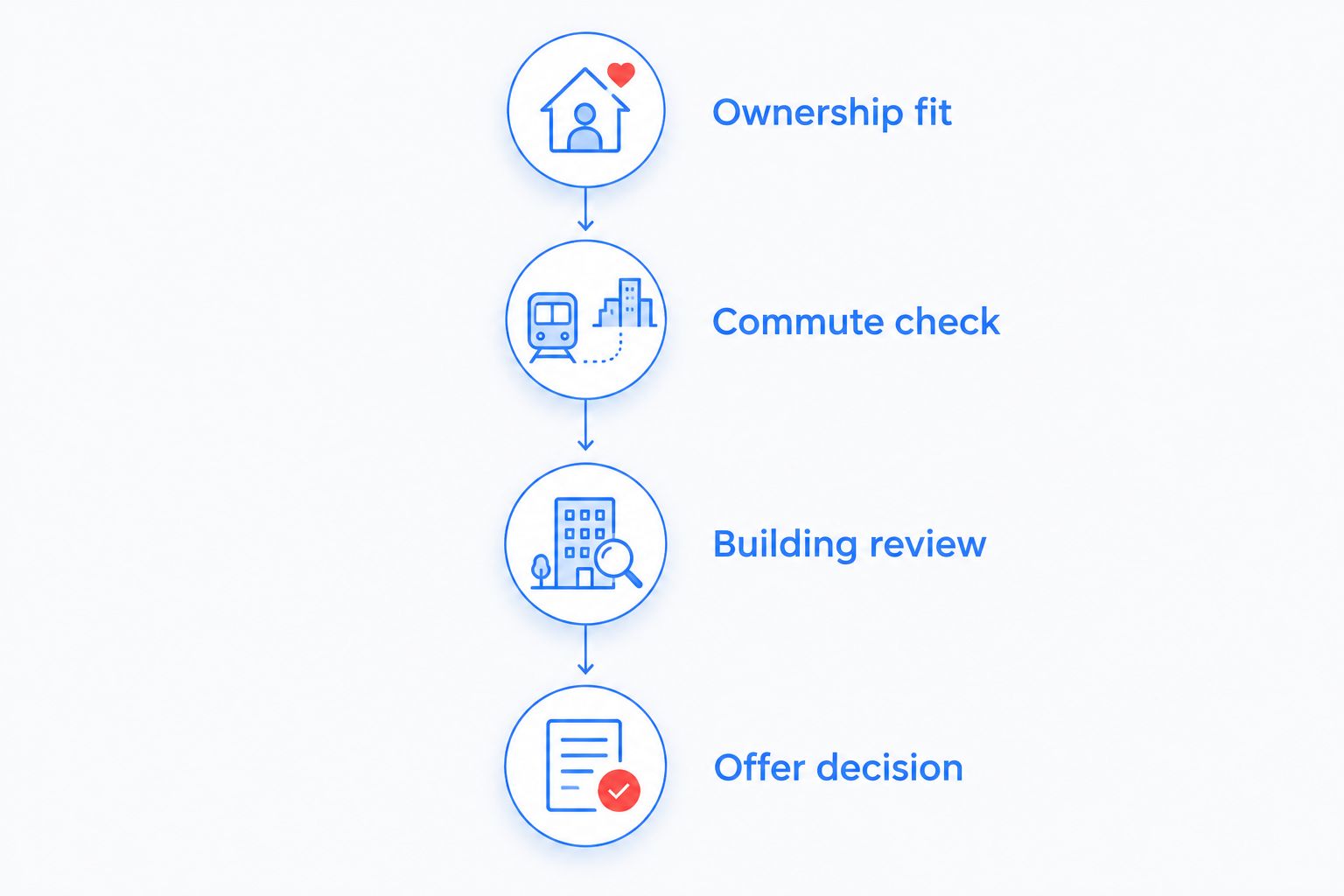
Use the same decision sequence for every finalist:
- Ownership fit: Confirm that the property type suits your intended use.
- Commute check: Travel from the actual address to your destination.
- Building review: Examine condition, documents, and restrictions with qualified advisers.
- Offer decision: Proceed only after the unresolved issues are clear.
A failed check is a reason to reconsider the property, not to ignore the issue because you like the neighborhood.
For sellers, ask for a valuation grounded in relevant comparable properties rather than a borough-wide trend. Compare 3 recently closed properties as a starting exercise, then ask which differences in condition, ownership type, and building affect their relevance; three is a review prompt, not a required valuation standard.
Soldbymichaeljacobson helps buyers, sellers, and investors with residential brokerage. Bring the exact address and your intended use to the discussion so the next step concerns a property, not a broad neighborhood label.
FAQ
What's the best up-and-coming Queens neighborhood in 2026?
Forest Hills is the default choice in this guide for buyers comparing houses, condos, and co-ops. This is a buyer-fit recommendation, not a forecast of appreciation.
Is Rego Park better than Forest Hills for buying a co-op?
Rego Park is a useful alternative to Forest Hills for a co-op-focused search, but the individual building decides the fit. Compare financial documents, approval requirements, and written occupancy rules.
Which Queens neighborhood should I consider for subway and LIRR access?
Woodside belongs on your shortlist for comparing subway and Long Island Rail Road access around Woodside station. Confirm current service and walk the route from the exact property.
Should I buy a co-op if I want to rent it out later?
Check the co-op's written sublet policy before buying for a future rental plan. Have your attorney review eligibility, restrictions, approval requirements, and whether the policy fits your intended use.
Does up-and-coming mean home values will rise?
No, an up-and-coming label does not establish future appreciation. Evaluate the property on its current condition, permitted use, obligations, and fit with your needs.
How should I compare two apartments in the same neighborhood?
Compare the actual units and their buildings separately. Review layout, exposure, condition, financial documents, and ownership rules, then test each door-to-door commute.
Can Michael Jacobson help with a Forest Hills home search?
Yes, Michael Jacobson's stated brokerage services include helping buyers find homes, condos, and co-ops in Forest Hills. Soldbymichaeljacobson also serves sellers, renters, and investors across its stated service areas.
One last thing
Before you make a 2026 co-op offer, write down the future use you need: living there long-term, altering the apartment, or renting it later. Have your attorney match that plan against the building’s written rules. The best neighborhood cannot fix a building that prohibits your plan.