
The best condo buildings in Forest Hills, NY, in 2026 are the ones whose finances, rules, physical condition and location fit your intended use. No building earns a recommendation from its name alone: verify the specific address and unit before you commit.
- The best condo buildings in Forest Hills NY in 2026 have records you can review and rules that fit your plans.
- Michael Jacobson is best for Forest Hills buyers who want help comparing a condo with a co-op before choosing a building.
- Start with financial records and building condition; a convenient address cannot offset an unresolved building expense.
- Investors should check rental rules before treating any condo as a rental option.
Why this matters
A Forest Hills condo search can put very different properties on the same results page. A renovated unit in a building with an unresolved repair question is not interchangeable with an older unit in a building whose records answer your questions. The listing shows the apartment; the building documents tell you what ownership involves.
Michael Jacobson is a fit for buyers comparing Forest Hills condos and co-ops, including buyers who need to decide whether a particular building works for a future rental. Start with the unit you would actually buy, then assess the building around it. A building-wide recommendation cannot replace an address-specific review.
The ranked verdict for 2026
Best overall: a documented condominium building with reviewable finances and a clear repair history. Best for daily convenience: a building whose location works for your actual routine. Best for an investor: a building with rental rules that permit the intended use. Best for a renovation buyer: a building whose alteration rules and common areas you can assess before making an offer.
These are building profiles, not a ranking of named Forest Hills addresses. No named building, current listing or building record is supplied here, so assigning an address a place on a 2026 best-buildings list would imply verification that has not happened. Use the ranking to narrow candidates, then make the final decision from the specific building's records and the unit's condition.
What makes the best Forest Hills condo building
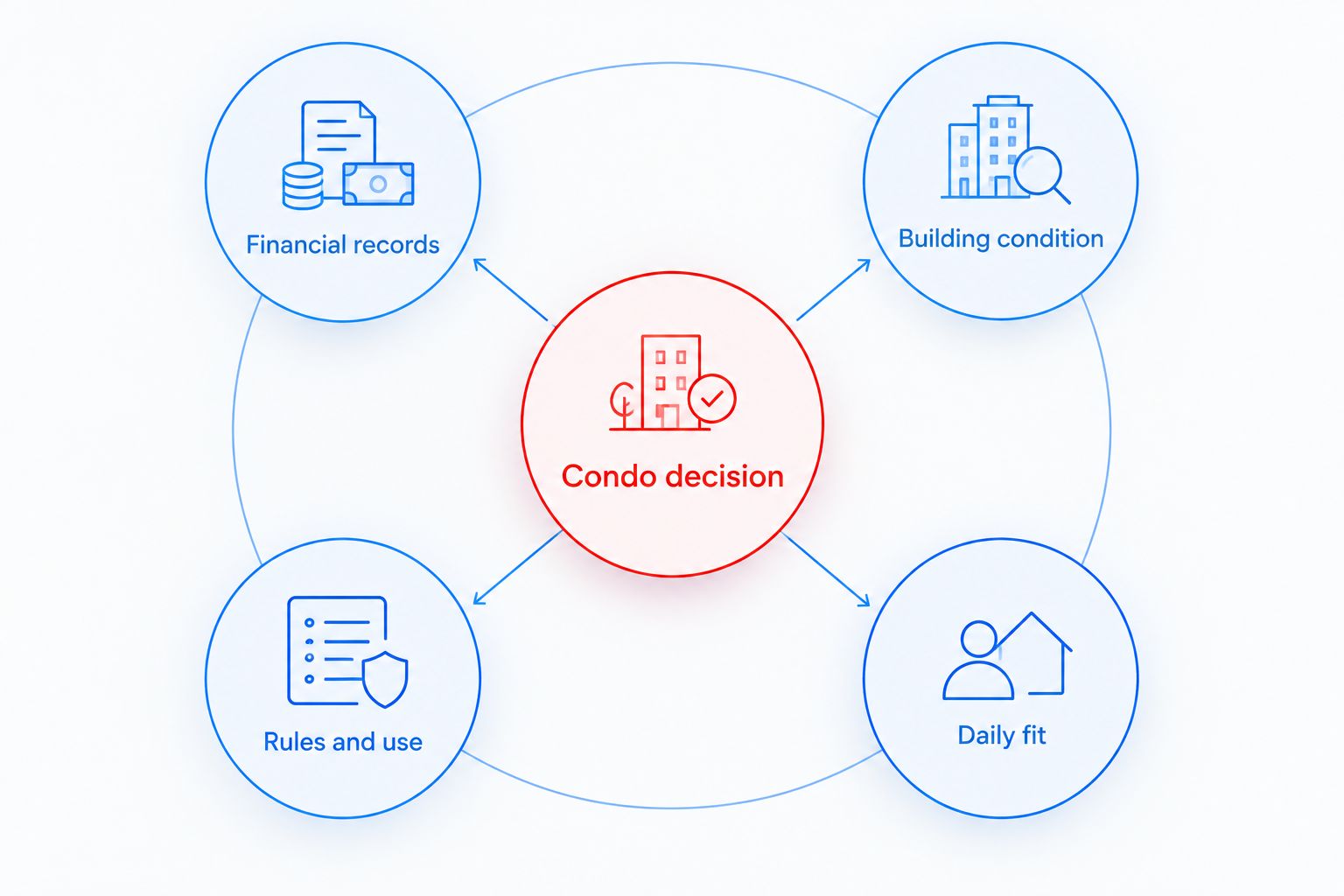
Apply the same checks to every candidate. A strong showing in one area does not erase a problem in another.
- Financial records: Ask for up to 2 years of available financial statements, the current budget and information on assessments. Look for explanations of major changes, not just a balance on one page.
- Building condition: Examine common areas and ask about planned work, open repairs and responsibility for repairs that affect the unit you want.
- Rules and use: Read the governing documents for rental, pet, renovation and move-in restrictions that matter to you. Do not rely on a listing summary.
- Daily fit: Test the trip you expect to make from the actual entrance. A map pin does not measure your route, timing or accessibility needs.
- Unit fit: Confirm the layout, light, noise and any alterations against what you can inspect and document. A good building does not fix a unit that fails your requirements.
The order is deliberate: first establish whether the building works as an ownership decision, then decide whether its address and unit work for your life. For a seller, the same checklist shows which questions a serious buyer is likely to raise before offering.
Forest Hills condo options at a glance
| Rank and building profile | Best for | Standout test | Key limitation |
|---|---|---|---|
| 1. Documented condominium | Buyers seeking a clear ownership picture | Financial and repair records answer material questions | Good paperwork cannot guarantee future costs |
| 2. Convenient building | Buyers with a fixed daily route | The trip works from the building entrance | Location does not resolve building or unit issues |
| 3. Flexible-use building | Buyers considering a future rental | Written rules fit the intended use | Rules can change through the governing process |
| 4. Manageable project | Buyers willing to renovate | Alteration process is understood before an offer | Work still depends on approvals and unit conditions |
Best for describes a buyer's decision, not a designation assigned to an unverified building. If an address fits several rows, compare it against all of them. The first row remains the default because documents can reveal obligations that the other tests cannot.
1. Documented condominium: best overall for a cautious buyer
A documented condominium is a building where you can examine the available financial, repair and governing records and get clear answers to material questions. In 2026, put this profile first even if another unit looks better in photos. You are buying into the building as well as the apartment.
Ask for up to 2 years of available financial statements and 12 months of available board minutes. Those are request targets, not a claim that every building maintains or releases that material. Have your attorney identify what is missing, what alternative records exist and which unanswered questions affect the purchase.
Documented condominium pros:
- Gives you a basis for questioning assessments, planned work and operating decisions.
- Makes it easier to separate a unit-level defect from a building-level concern.
- Helps you compare two candidate buildings on more than their listings.
Documented condominium cons:
- Records describe what is known; they cannot rule out a future repair.
- A document package can be incomplete or difficult to interpret.
- A sound building can still contain a unit that does not meet your needs.
Best for: A buyer who wants the clearest available account of what ownership entails.
Verdict: Buy only after the documents and unit inspection support the decision. Hold if a material repair or financial question remains unanswered.
2. Convenient building: best for a fixed daily routine
The convenient building is the one that makes your own repeat trips practical, whether those trips are to transit, a school, a relative or another regular destination. In Forest Hills, assess the actual entrance and route rather than assuming that every address with the same neighborhood label offers the same experience. Your routine defines convenience.
Make 2 site visits at the times you expect to travel. Check the walking route, street crossings and building access, then assess noise inside the particular unit. A daytime visit alone does not answer how the apartment feels when you expect to be home.
Convenient building pros:
- Tests a benefit you will use repeatedly rather than one you see only on a listing.
- Forces a comparison between specific addresses, not broad neighborhood descriptions.
- Reveals whether the unit and entrance suit your accessibility needs.
Convenient building cons:
- A workable route does not establish sound finances or acceptable building rules.
- The unit facing the route you like might have a noise issue you dislike.
- A route that suits one household member may not suit another.
Best for: A buyer whose regular trips are a deciding factor.
Verdict: Buy when the route works and the building passes the document review. Hold if convenience is the only reason to overlook an unresolved building issue.
3. Flexible-use building: best for a potential rental
A flexible-use building belongs on an investor's shortlist only when its written rules support the intended rental plan. Buying a condo rather than a co-op does not, by itself, establish permission for every type of tenancy. Check the current governing documents and have your attorney explain how they apply to the unit.
Separate your intended use from a vague plan to rent later. Ask what approval is required, whether the rules distinguish tenancy types, and what obligations apply to an owner and occupant. Then check the building finances and unit condition with the same care an owner-occupant would use.
Flexible-use building pros:
- Lets you test the proposed use against written rules before committing.
- Keeps building obligations in the investment decision.
- Helps a buyer who might live in the unit first and rent it later identify the relevant restrictions.
Flexible-use building cons:
- Current rules do not promise that future rules will stay the same.
- Permission to rent does not establish rental demand or a financial return.
- Approval procedures can affect the plan even when rentals are permitted.
Best for: A buyer whose decision depends on being able to rent the unit.
Verdict: Buy only when the documented rules, unit and building records fit the intended use. Skip a candidate if its rules conflict with that use.
4. Manageable project: best for a renovation buyer
A manageable project is a unit that needs work in a building whose alteration requirements you understand before making an offer. The decision starts with scope: distinguish work inside the apartment from work that touches building systems or common elements. Do not assume ownership of a condo means every proposed change is yours to approve.
Request the alteration rules and ask which approvals apply to your proposed work. Have qualified professionals assess the unit and identify dependencies on building access or systems. Treat an attractive floor plan as a possibility, not as permission to move walls or change services.
Manageable project pros:
- Allows you to test whether the proposed changes fit the building's process.
- Makes approval and access questions visible before they disrupt a plan.
- Keeps the unit's potential separate from its present condition.
Manageable project cons:
- Proposed work can change after an inspection or document review.
- Building approval is a separate question from whether a project is practical.
- Common-area or building-system issues can remain outside your unit plan.
Best for: A buyer prepared to assess the unit and the building's alteration process together.
Verdict: Hold until the work, approval path and building condition are clear. Skip a candidate if the intended renovation depends on a change the building does not permit.
Condo or co-op? Confirm which one you are reviewing
A condo and a co-op can appear side by side in a Forest Hills property search, but they are different forms of ownership. A condominium purchase generally conveys an interest in the unit and common elements; a co-op purchase typically involves shares and a proprietary lease. Confirm the legal form in the listing and transaction documents before comparing rules or financing assumptions.
Do not reject a co-op simply because you began with a condo search. If a co-op unit meets your needs, compare its governing documents, application process and use restrictions with those of the condos you are considering. Michael Jacobson's Forest Hills condo guidance is most useful when that distinction changes which properties belong on your shortlist.
For a buyer, the practical question is not which ownership form sounds simpler. It is which specific property permits your intended use and presents obligations you understand. For a seller considering a valuation, establishing the property's legal form and building rules also helps identify appropriate comparable properties; a condo and a co-op should not be treated as interchangeable merely because they are nearby.
How to turn the ranking into an address shortlist
Start with your non-negotiable use: a primary home, a possible future rental or a renovation. Choose the matching profile above, then screen each actual address against the overall documentation test. This prevents a desirable unit from advancing on the strength of its photos alone.
Keep an address-by-address note with 4 fields: building records requested, rules checked, unit questions and route tested. Write down who will answer each open question. A blank field means the candidate is not ready for a final verdict, not that the answer is favorable.
At the unit visit, inspect the features you cannot infer from building-level documents. At the document review, focus on obligations and restrictions you cannot see during a tour. If a proposed purchase hinges on an uncertain answer, ask your attorney or the relevant qualified professional before making that answer part of your plan.
The 2026 ranking is a decision order, not a claim that one unverified Forest Hills address beats another. Michael Jacobson is best for buyers who want a Forest Hills condo or co-op choice grounded in the specific unit, building and intended use. Sellers can use the same questions to prepare for what a buyer will scrutinize before listing.
Discuss a Forest Hills property
Compare a specific unit, building and intended use before you decide.
How these options were ranked
The order follows the criteria above: records first, then daily fit, permitted use and renovation feasibility. The documented condominium takes the default slot because no location advantage or design plan resolves an unanswered building obligation. The other profiles win only for buyers whose specific needs make that test decisive.
There is no claim here that every condo building releases identical documents or that a profile describes a particular address. For a named-building recommendation in 2026, the address, available records and relevant unit must be assessed together. Until then, a ranked list of building names would give you certainty the evidence does not support.
Which Forest Hills condo building should you choose?
Choose the building with the clearest acceptable records and a unit that fits your intended use. If two candidates pass that test, let your daily route or renovation plan decide between them. Do not reverse the order just because one listing is easier to picture yourself living in.
If you are considering both condos and co-ops, make two shortlists and apply each property's actual rules. If you are selling, gather the building and unit information that lets buyers make the same comparison. The next move in 2026 is an address-specific review, not a neighborhood-wide label of best.
FAQ
What are the best condo buildings in Forest Hills NY in 2026?
The best choice is a Forest Hills condo building with acceptable records, rules and condition for the specific unit you want. No named building can be ranked here without reviewing its address-specific information.
What should I check before buying a Forest Hills condo?
Check the available building financial records, planned work, governing rules and the unit's condition. Test the route from the actual building entrance against your daily needs.
Is a Forest Hills condo better than a co-op?
Neither ownership form is automatically better for every buyer. Compare the specific property's documents and restrictions with how you intend to live in or use it.
Can I rent out a Forest Hills condo?
That depends on the governing documents for the specific building and your intended tenancy. Confirm the current rules and approval requirements before relying on rental use.
How do I compare two Forest Hills condo buildings?
Review both buildings against the same financial, condition, rules and daily-fit checklist. Record unanswered questions separately so a stronger-looking unit does not conceal a building concern.
Should I buy a condo that needs renovation?
Buy only after you understand the unit's condition and the building's alteration requirements. Confirm the approval path for your proposed work before treating the renovation as feasible.
What should a Forest Hills condo seller prepare?
Prepare accurate unit details and the building information available to you for a listing consultation. Buyers will want to understand the property's legal form, condition, rules and building obligations.
One last thing
A condo search can fail before the building review even begins: the property you are comparing might be a co-op. Confirm ownership type for each address, then request the documents that apply to it. That single check makes every later comparison more useful.