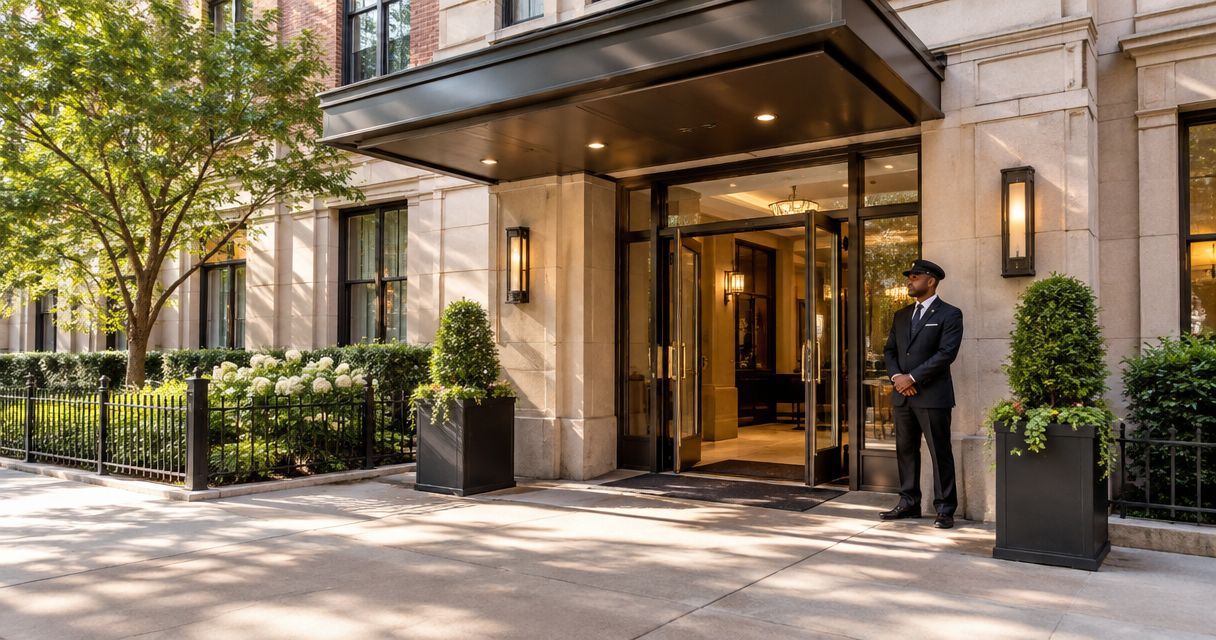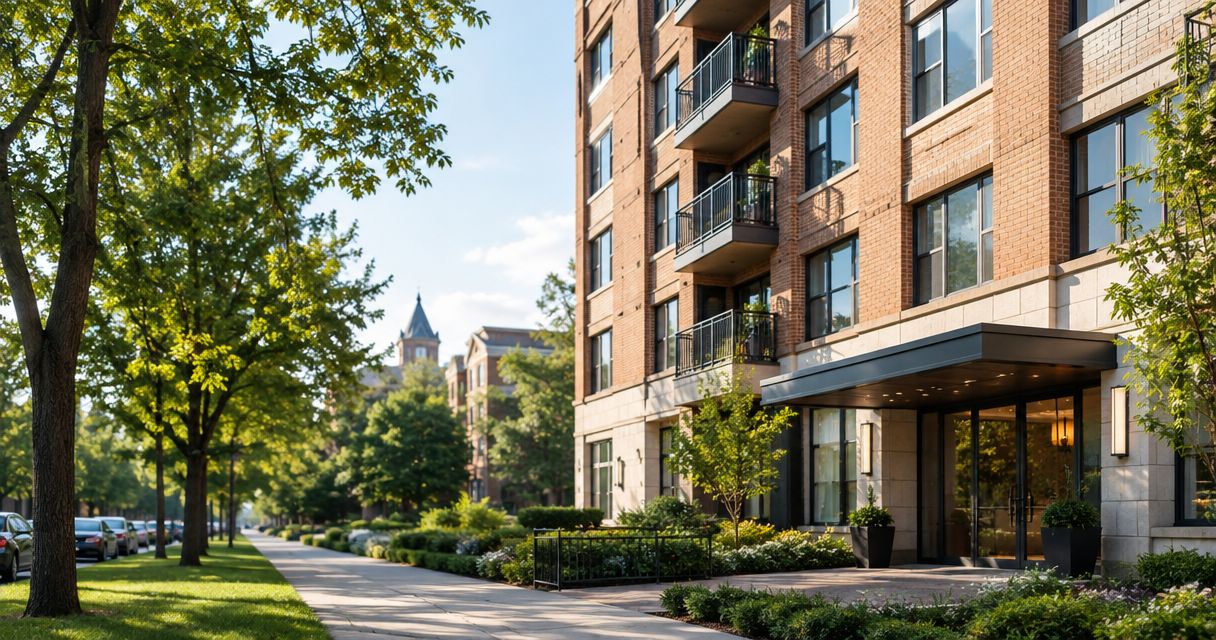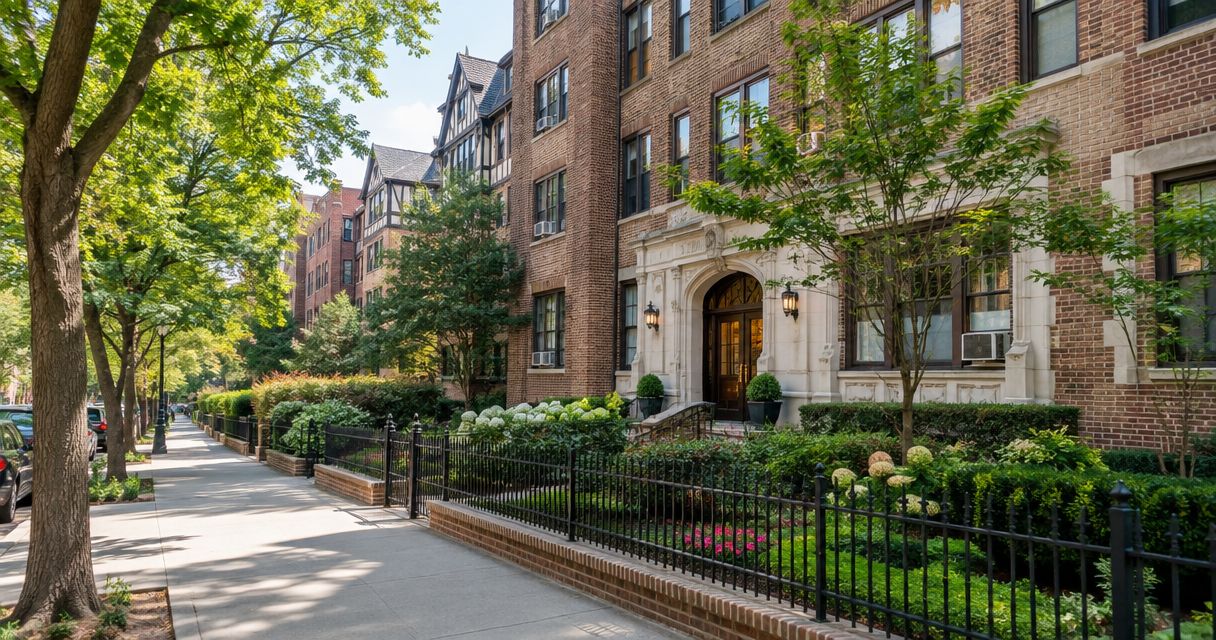
Best overall: a well-run prewar low-rise co-op with strong financials. Best for commuters: a Queens Boulevard elevator building near the subway. Best for a quieter block: a mid-century elevator co-op off the main avenues. Those are the building types Michael Jacobson at Sold by Michael Jacobson steers Forest Hills co-op buyers toward in 2026. Which specific building wins depends on its financials, not its lobby.
- The best co-op buildings in Forest Hills NY in 2026 are the ones with clean financials, not the ones with the nicest lobby.
- Prewar low-rise co-ops win on character and scale; Queens Boulevard high-rises win on commuting and services.
- Check the underlying mortgage, reserve fund and sublet rules before you fall for any unit.
- Buyers who need flexibility should screen for board and sublet rules first.
Why this matters in 2026
Forest Hills sells more co-ops than most Queens neighborhoods, and the buildings vary widely. Two apartments with the same layout can carry very different monthly costs, very different board rules and very different resale risk.
A co-op is not a house or a condo. You buy shares in a corporation, and the building's finances become your finances. That is why a ranking by building type and by what to verify is more useful than a ranking by name. Names on a list go stale; the financial statements change every year.
This guide ranks the building types you will see in Forest Hills, tells you who each one fits, and lists what to check before you make an offer. For a specific building, ask for its current documents and read them line by line.
What makes a good co-op building
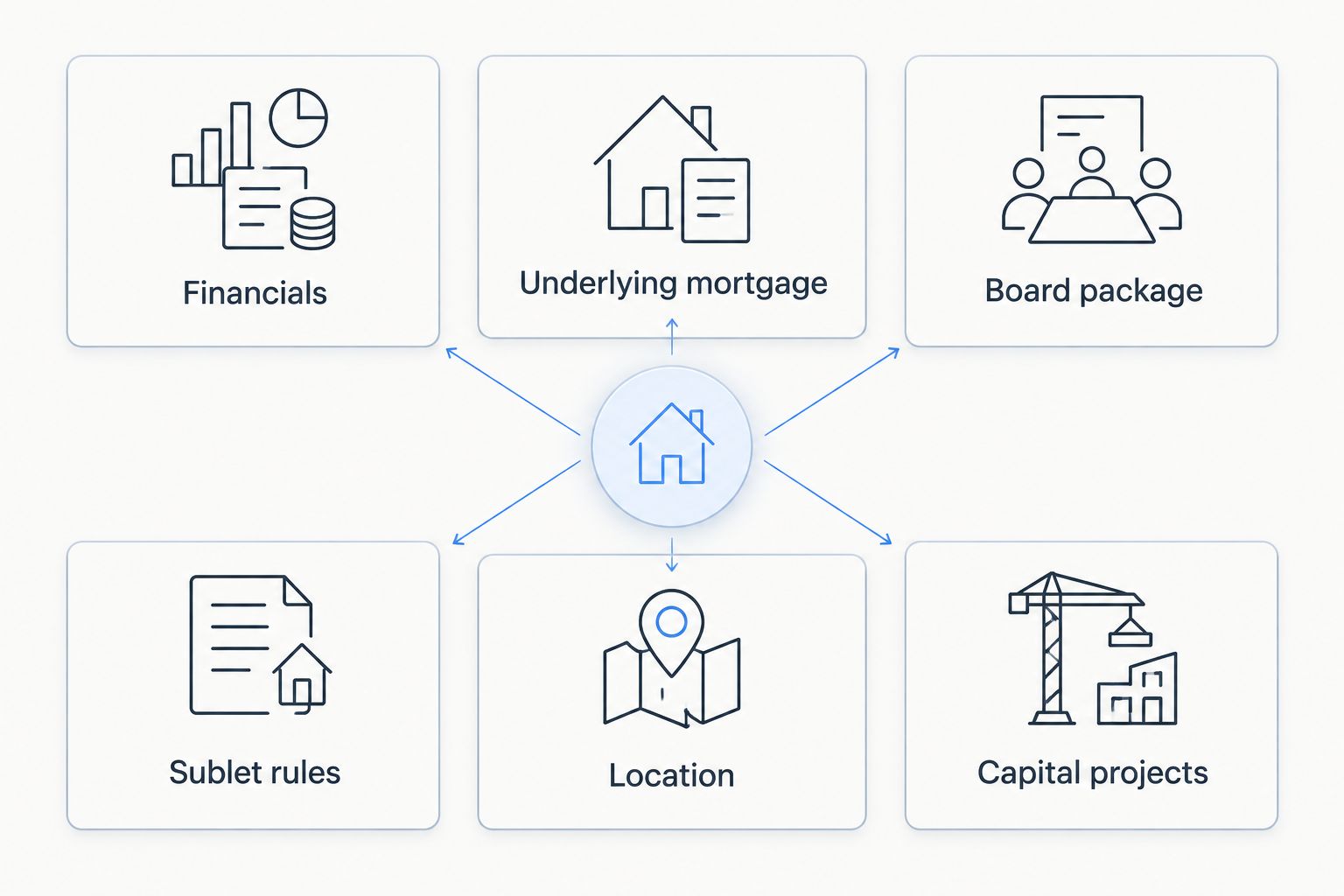
Six criteria decide the ranking below. Audit them before you look at the table.
- Financials: a healthy reserve fund, a clean audit, and maintenance that is not being propped up by one-time fixes.
- Underlying mortgage: the building's own debt, its terms, and when it comes due. A large balloon payment ahead is a warning.
- Board package: how much paperwork the board demands and how long approval takes. Ask what the process looks like in practice.
- Sublet rules: whether you can rent the unit out, for how long, and under what fees. This matters for investors and for anyone whose plans might change.
- Location and commute: distance to the subway and the Long Island Rail Road, and how the block feels day to day.
- Capital projects: planned or recent work on roofs, boilers, facades and windows, and whether an assessment is coming.
Co-op building types at a glance
| Building type | Best for | Standout feature | Key limitation |
|---|---|---|---|
| Prewar low-rise garden co-op | Buyers who want character and a smaller community | Architecture and a human scale | Older systems; fewer amenities |
| Queens Boulevard high-rise | Commuters who want services | Access to transit and building staff | Busier setting; larger board and more rules |
| Mid-century elevator co-op | Buyers who want a quieter block | Practical layouts on residential streets | Style is plainer; check capital plans |
| Co-op near Forest Hills Gardens | Buyers who want that setting | The surrounding neighborhood | Availability varies; confirm what is listed now |
| Small self-managed co-op | Buyers who want a close-knit building | Direct say in how the building runs | Fewer owners share costs; management quality varies |
1. Prewar low-rise garden co-op: best co-op for character and community
These are the buildings most people picture when they think of Forest Hills co-ops: brick, courtyards or landscaped grounds, and a smaller number of neighbors. They tend to appeal to buyers who care how a building looks and feels more than what amenities it has.
Prewar low-rise pros:
- Architectural detail and layouts that newer buildings rarely match.
- A smaller building often means a more involved, more visible board.
- Grounds or courtyards give you outdoor space without owning a house.
- Long-tenured owners often signal a stable building.
Prewar low-rise cons:
- Older mechanical systems can mean capital projects and assessments.
- Amenities are usually limited compared with a large high-rise.
- Fewer units means fewer owners to spread a big repair bill across.
Best for: buyers who want character and can read a financial statement. Verdict: Buy, once the reserve fund and the capital plan check out.
2. Queens Boulevard high-rise co-op: best co-op for commuters
Queens Boulevard is the main artery through Forest Hills, and the high-rises along it are built around convenience. The neighborhood is served by the E, F, M and R subway lines at 71st Avenue and by the Long Island Rail Road at Forest Hills station. A building close to those stops shortens the daily trip to Manhattan.
Queens Boulevard high-rise pros:
- Proximity to transit, shops and restaurants without needing a car.
- Staff and services that smaller buildings cannot usually offer.
- More units means costs are spread across more owners.
Queens Boulevard high-rise cons:
- A busier street setting than the side blocks.
- Bigger buildings mean more rules and more formal processes.
- Amenities cost money; check what they add to maintenance.
Best for: commuters and buyers who want services. Verdict: Buy, if you confirm what the amenities cost you each month and how the building funds them.
3. Mid-century elevator co-op: best co-op for a quieter block
Many Forest Hills co-ops sit on residential streets away from the boulevard. These elevator buildings trade the prewar detail for practical layouts and a calmer setting. Some buyers find this the best balance of daily life and commute.
Mid-century elevator co-op pros:
- Quieter surroundings than the main avenues.
- Straightforward, usable floor plans.
- Elevator access, which matters for accessibility and for resale to buyers who need it.
Mid-century elevator co-op cons:
- Plainer style than a prewar building.
- Systems and facades may be due for major work; ask about the schedule.
- Walking distance to transit varies block by block.
Best for: buyers who prioritize peace and practical layout. Verdict: Buy, after you walk the block at rush hour and at night.
4. Co-op near Forest Hills Gardens: best co-op for the Gardens setting
Forest Hills Gardens is a planned community with its own private governance through the Forest Hills Gardens Corporation. Buyers who want to live near it sometimes look for co-op apartments in the surrounding area rather than a house inside it. The setting is the draw.
Near-the-Gardens pros:
- Proximity to one of the best-known parts of the neighborhood.
- Walkable access to Station Square and the rail station.
Near-the-Gardens cons:
- Availability changes constantly; there may be few or no matching listings at a given time.
- Being near the Gardens is not the same as being inside it, and the rules that apply inside do not automatically apply to nearby buildings.
Best for: buyers who have a specific setting in mind and can wait for the right listing. Verdict: Hold, unless a current listing matches, and then verify exactly where the building sits relative to the Gardens boundaries.
5. Small self-managed co-op: best co-op for a close-knit building
Some smaller buildings are run directly by their owners rather than a large management company. The owners make the decisions, and that can be a strength or a risk depending on who is doing the work.
Small self-managed co-op pros:
- A direct say in how the building is run.
- Neighbors who know each other.
Small self-managed co-op cons:
- Fewer owners share every expense, so one big repair hits harder.
- Quality of management depends on volunteers; read the board minutes.
- Records can be less polished than in professionally managed buildings.
Best for: hands-on buyers who will read the minutes and might serve on the board. Verdict: Wait, until you have seen the last few years of financials and minutes.
How these types were ranked
The order follows the six criteria above. Prewar low-rise and Queens Boulevard high-rise come first because they give buyers the clearest reasons to choose them, character in one case and daily convenience in the other. The lower entries are not worse buildings; they simply depend more on individual circumstances, such as which listing is available today or how well a small building is managed.
No type beats the numbers in a specific building. A weak prewar co-op loses to a strong mid-century one every time.
What to check before you make an offer
The most useful documents in a Forest Hills co-op purchase are the audited financial statements, the offering or disclosure materials, the proprietary lease and the recent board minutes. Ask your attorney to review them, and ask your broker which questions the board tends to raise.
Then match the answers to your plan:
- Living there long term: weight capital projects and reserve strength most heavily.
- Renting it out later: read the sublet rules first. They can rule out a building on their own.
- Buying with a tight budget: compare maintenance and any assessments, not just the asking price.
- Selling within a few years: ask about flip tax and how quickly units in the building have moved.
Co-op, condo or something else
If a board approval process or sublet limits sound like a poor fit, a condo may suit you better. Condos generally offer more flexibility on renting and resale, and the tradeoffs are different. Compare the two before deciding, and consider that your goals may point to a different Queens neighborhood entirely.
Who is behind this guide
Michael Jacobson is an Associate Real Estate Broker who helps buyers, sellers and investors across Forest Hills, Queens and Long Island. His Zillow profile, re-checked September 28, 2026, lists 336 sold transactions across his service areas and 194 reviews, states over 10 years in real estate, and carries the line "Rated Top 1% of all Zillow Agents in the US." Those figures cover all of his service areas, not Forest Hills alone, and the Top 1% wording is the profile's own claim. Check the Zillow profile for current counts.
Talk through your co-op search
Get building-specific guidance for buying or selling in Forest Hills.
FAQ
What are the best co-op buildings in Forest Hills NY?
The best co-op buildings in Forest Hills are the ones with strong reserves, a manageable underlying mortgage and rules that fit your plans. By type, prewar low-rises lead on character and Queens Boulevard high-rises lead on commuting.
Is a co-op a good buy in Forest Hills in 2026?
A co-op is a good buy if the building's financials are sound and you can live with board approval and sublet limits. Read the audited statements before you commit.
What should I check first in a Forest Hills co-op?
Start with the financial statements, then the underlying mortgage and the reserve fund. Those three show whether assessments or maintenance increases are likely.
Can I rent out a co-op apartment in Forest Hills?
It depends on the building. Each proprietary lease sets its own sublet rules, so read them before you buy if renting is part of your plan.
Which Forest Hills co-ops are best for commuters?
Buildings near Queens Boulevard and Forest Hills station suit commuters best. The neighborhood is served by the E, F, M and R subway lines and the Long Island Rail Road.
Is a condo better than a co-op in Forest Hills?
A condo is usually better if you want flexibility on renting and a lighter approval process. A co-op can fit better if you value the building and its community over those freedoms.
Does a co-op near Forest Hills Gardens follow the Gardens' rules?
Not automatically. Being near Forest Hills Gardens is not the same as being inside it, so confirm where the building sits and which rules apply.
One last thing
Ask to see the last three years of board minutes before you pay for an inspection. Repeated discussion of the same leak, boiler or facade problem tells you more about a building's next assessment than any listing description does. Do this in 2026 for every building on your shortlist.