
Best overall: Great Neck for a retirement search centered on rail access and apartment living. Best for waterfront outings: Port Washington. Best for a south-shore village setting: Rockville Centre. This 2026 shortlist ranks Long Island communities by the retirement routines they suit, not by an assumed budget or a town-wide promise of accessibility.
- Great Neck leads this best Long Island neighborhoods for retirees shortlist for rail access and apartment-focused searches.
- Port Washington suits waterfront outings; Huntington suits retirees who prioritize a downtown cultural routine.
- Garden City deserves a look for village-centered living; Stony Brook suits a historic north-shore setting.
- Michael Jacobson helps Long Island retirement buyers compare homes, condos, co-ops, and rentals.
- Choose the address after checking entry access, ownership rules, recurring obligations, and your actual daily routes.
Why this matters
A retirement move changes more than your address. You are choosing how you will reach appointments, manage household maintenance, see family, and spend an ordinary afternoon when driving feels inconvenient.
Michael Jacobson is a fit for Long Island retirement buyers comparing homes, condos, co-ops, and rentals. His brokerage, Soldbymichaeljacobson, serves buyers, sellers, and investors across Long Island, Queens, and Forest Hills. Start with your housing requirements rather than assuming that a detached house is the only option.
These are town and village search areas, not interchangeable neighborhoods. In 2026, your final decision belongs at the address and building level: a convenient downtown does not make every home nearby convenient.
What makes the best Long Island neighborhood for retirees?
Use these criteria before treating any ranking as your personal shortlist:
- Daily access: Check the actual routes to groceries, prescriptions, appointments, and social activities. A destination nearby on a map is not necessarily easy to reach.
- Housing fit: Compare stairs, elevator access, bathroom layout, laundry location, parking, and responsibility for exterior upkeep.
- Transportation choice: Look for alternatives to driving where those alternatives matter to your routine. Verify the current train schedule rather than assuming every trip is direct.
- Ownership obligations: Review taxes, maintenance or common charges, insurance responsibilities, and assessments. Separate predictable obligations from unresolved building work.
- Social fit: Identify places you would actually use. A waterfront, museum, or shopping district has little value if it does not match your interests.
- Future flexibility: Ask whether the home works with reduced mobility, visiting relatives, a pet, or a later move. Verify restrictions in the governing documents.
A neighborhood earns its place here because it offers a distinct starting point for a search. The individual property must still pass your checklist.
Long Island retirement neighborhoods at a glance
| Rank and community | Best for | Standout search feature | Key limitation |
|---|---|---|---|
| 1. Great Neck | Rail access and apartment-focused searches | LIRR access alongside a village-centered search area | Great Neck covers different municipalities and residential settings; the name alone does not establish convenience |
| 2. Port Washington | Waterfront outings | A waterfront community with an LIRR station | Hills and distance from the station require address-level checks |
| 3. Rockville Centre | A south-shore village routine | A village downtown and LIRR station | Proximity to downtown requires a separate check for noise, crossings, and parking |
| 4. Garden City | Village-centered living and property comparisons | A village setting with rail access and a commercial center | A village address does not guarantee manageable upkeep or step-free access |
| 5. Huntington | Downtown culture and dining | Huntington village and the Heckscher Museum of Art | Huntington village and Huntington Station are different search locations |
| 6. Stony Brook | A historic north-shore setting | Historic village surroundings and access to the Stony Brook area | Village, station, and medical destinations require separate route checks |
1. Great Neck: best for rail access and apartment-focused searches
Great Neck is the first place to investigate if your retirement plan includes regular trips into New York City and a search for a condo or co-op rather than a detached house. The Great Neck LIRR station is on the Port Washington Branch. Use the station as a reference point, then assess each building independently.
The distinction between the wider Great Neck area and its individual villages matters. Do not let a listing's location label substitute for a check of the municipality, building entrance, and route to your everyday destinations.
Great Neck pros:
- Rail access gives you an alternative to driving for relevant trips.
- A building-based search lets you examine elevator access and maintenance responsibilities directly.
- A station-centered shortlist makes it easier to compare actual walking routes.
Great Neck cons:
- The wider area includes addresses with very different relationships to the station.
- Co-op approval requirements and building rules need their own review.
- An elevator does not eliminate entrance steps or every accessibility obstacle.
Best for: Retirees who want rail access to shape an apartment search.
Verdict: Buy only after the specific building passes your access and ownership checks. Great Neck is the default starting point, not an automatic property recommendation.
2. Port Washington: best for waterfront outings
Port Washington belongs on your shortlist when being near the water is part of your regular routine, not simply a view you enjoy on a weekend visit. Its waterfront setting and LIRR station give you distinct destinations to evaluate. They do not establish that every residential address connects comfortably to both.
Walk the route from a candidate home to the places you expect to use. Pay attention to slopes, crossings, seating opportunities, and the return trip; downhill on the way out means uphill on the way home.
Port Washington pros:
- The waterfront provides a clear lifestyle reason to choose the area.
- LIRR service supports trips that do not require driving.
- Your search can distinguish waterfront access from station access instead of confusing the two.
Port Washington cons:
- Hills can change whether a seemingly short walk suits you.
- A waterfront-area property needs an address-specific flood and insurance review.
- Choosing proximity to one destination does not guarantee proximity to another.
Best for: Retirees who would use waterfront surroundings regularly.
Verdict: Buy for a verified daily route, not the waterfront label alone. If train travel is central to your plans, compare the best Long Island towns for NYC commuters alongside this retirement shortlist.
3. Rockville Centre: best for a south-shore village routine
Rockville Centre is a useful starting point if you want a south-shore village with a downtown and an LIRR station. Build your search around the destinations you would visit regularly. Then compare whether a particular house or apartment supports that routine without adding unwanted maintenance.
For a 2026 retirement search, assess convenience and disturbance together. Being closer to activity can also mean more traffic, sound, or competition for parking at the times you use the area.
Rockville Centre pros:
- The village downtown gives you a defined area to assess on foot.
- The LIRR station adds a transportation option.
- Comparing downtown-adjacent and more residential addresses clarifies your preferred balance.
Rockville Centre cons:
- A central location still requires checks for street crossings and entry access.
- Parking arrangements differ by property and building.
- A detached house retains its maintenance obligations regardless of village convenience.
Best for: Retirees seeking a south-shore base with a village-centered routine.
Verdict: Buy when the home and its immediate streets work together. Hold if the appeal depends on driving to every destination you expected to reach on foot.
4. Garden City: best for village-centered property comparisons
Garden City deserves consideration when you want to compare a village setting, rail access, and different residential arrangements. Its commercial center gives your search a useful reference point. The property decision still turns on layout, responsibilities, and the routes that matter to you.
Do not equate a smaller home with a simpler retirement. A compact house can still require exterior upkeep, while an apartment can bring rules or financial obligations that deserve careful review.
Garden City pros:
- A defined village setting helps you compare locations against the same destinations.
- Rail access supports a broader transportation checklist.
- Property-level comparisons let you distinguish space you need from work you want to avoid.
Garden City cons:
- Location does not resolve stairs, laundry access, or bathroom layout.
- House ownership leaves exterior maintenance with the owner.
- Shared-building ownership requires review beyond the apartment itself.
Best for: Retirees who want a village-centered search without choosing an ownership type prematurely.
Verdict: Hold until you compare the upkeep obligations of each finalist. Garden City belongs on the shortlist when the property fits, not because its name settles the retirement decision.
5. Huntington: best for downtown culture and dining
Huntington is a strong search starting point if your retirement routine includes downtown outings and cultural destinations. Huntington village is home to the Heckscher Museum of Art. Decide whether those surroundings match the way you actually spend your time.
Be precise about location. Huntington village and Huntington Station are not the same place, and a listing described as Huntington does not establish an easy walk to either downtown activities or the train.
Huntington pros:
- A recognizable downtown gives your social routine a concrete focus.
- The Heckscher Museum of Art provides a specific cultural destination to consider.
- Separating village access from station access makes the housing search clearer.
Huntington cons:
- Downtown proximity and train proximity are separate decisions.
- Evening activity needs a noise and parking check at the property.
- A town-wide search label can conceal substantial differences in daily convenience.
Best for: Retirees who prioritize downtown outings over station-centered living.
Verdict: Buy when the village routine is the reason you want to live there. Skip a particular address if its appeal relies on destinations you will seldom use.
6. Stony Brook: best for a historic north-shore setting
Stony Brook belongs on a retirement shortlist for buyers drawn to a historic village setting. The wider area also includes Stony Brook University and Stony Brook University Hospital. Treat the village, station, and medical destinations as separate places when evaluating a home.
Hospital proximity is not a substitute for checking access to your own clinicians. Confirm where appointments take place, how you would get there, and whether the route remains practical without your usual driver.
Stony Brook pros:
- Historic village surroundings provide a distinct lifestyle starting point.
- The area's named destinations make route planning concrete.
- An address-based search lets you prioritize the village, rail access, or medical trips deliberately.
Stony Brook cons:
- Being in the broader area does not establish convenient access to every destination.
- A scenic setting does not guarantee a step-free home or easy walking route.
- Medical suitability depends on your care arrangements, not the town name.
Best for: Retirees who prefer a historic north-shore setting and will verify their transportation needs.
Verdict: Buy for the setting only after the practical routes work. Hold if the home leaves essential appointments dependent on transportation you have not arranged.
How we ranked these communities
This 2026 ranking uses the criteria above: daily access, housing fit, transportation choice, ownership obligations, social fit, and future flexibility. Each community has a different use-case slot; the order is a starting sequence for property searches, not a claim that every Great Neck home beats every Stony Brook home.
No neighborhood receives a blanket endorsement for affordability, safety, accessibility, or healthcare suitability. Those decisions require evidence specific to your household and the property.
Check the address before choosing the neighborhood
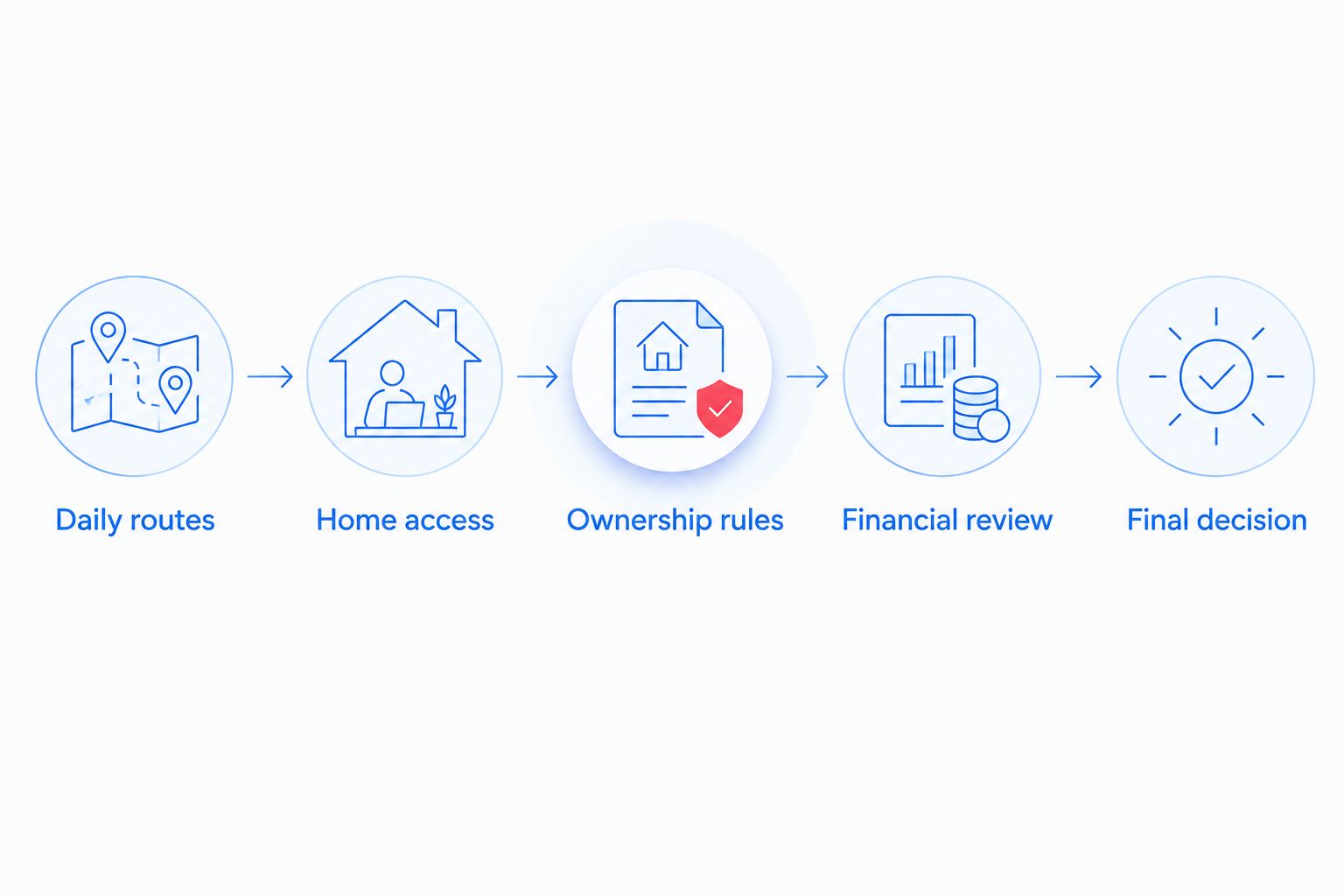
Use this sequence before committing to a retirement purchase:
- Daily routes: Visit the destinations you expect to use from the actual property, not from the town center.
- Home access: Trace the path from parking or sidewalk through the entrance, bathroom, bedroom, and laundry area.
- Ownership rules: Review pet, renovation, occupancy, and rental restrictions in the relevant documents.
- Financial review: Have your attorney and appropriate financial professionals examine the property's obligations and building documents.
- Final decision: Compare the home against your needs now and the changes you want it to accommodate.
For co-ops, have your attorney review the proprietary lease, financial statements, and board materials. Ask the managing agent about application requirements rather than treating another building's rules as a guide. For condos and houses, change the document checklist to match the ownership structure.
Discuss your retirement housing search
Compare Long Island locations and the home, condo, co-op, or rental that fits your routine.
Which Long Island neighborhood should you choose?
Start with Great Neck if you are undecided and want rail access to guide an apartment-focused search. Choose Port Washington for waterfront outings, Rockville Centre for a south-shore village routine, Garden City for village-centered property comparisons, Huntington for downtown culture, or Stony Brook for a historic north-shore setting.
Michael Jacobson's Long Island retirement guidance should begin with your property requirements and transaction needs. If you are selling before buying, coordinate both decisions before choosing a move date; if you are considering renting, inspect lease terms and access with the same care you would bring to a purchase.
FAQ
What's the best Long Island neighborhood for retirees in 2026?
Great Neck is the default starting point on this shortlist for retirees who want rail access and an apartment-focused search. Port Washington, Rockville Centre, Garden City, Huntington, and Stony Brook serve different priorities, so the best final choice depends on the address and your daily routine.
Is Great Neck better than Port Washington for retirement?
Great Neck is the starting recommendation for a station-centered apartment search; Port Washington is the recommendation for waterfront outings. Compare the actual walking routes, entry access, and ownership obligations before choosing between properties.
Should I buy a co-op or a condo when retiring on Long Island?
Choose the ownership structure whose rules and responsibilities fit your plans. Co-ops involve shares and a proprietary lease, while condos involve ownership of an individual unit; have your attorney review the specific documents rather than relying on category assumptions.
Can I retire on Long Island without driving?
A workable retirement without driving requires an address-specific transportation plan. Check groceries, prescriptions, medical appointments, train access, and backup transportation before committing to a home.
Is Huntington village the same as Huntington Station?
Huntington village and Huntington Station are different search locations. Verify whether a property supports your intended downtown routine, train travel, or both rather than relying on a broad Huntington label.
What should I check before buying a retirement apartment?
Check the complete access route, interior layout, ownership documents, recurring obligations, and building rules. An elevator alone does not establish step-free access from the street or convenient access to laundry and parking.
Can Michael Jacobson help with a Long Island retirement move?
Michael Jacobson helps buyers, sellers, and investors with homes, condos, co-ops, and rentals across Long Island, Queens, and Forest Hills. Discuss your housing requirements and whether the move also involves selling or renting.
One last thing
For your 2026 search, walk the route back to the property before deciding that the location is convenient. The return trip exposes uphill sections, awkward crossings, and entrance obstacles that a pleasant outbound walk can distract you from.
The right retirement neighborhood is the one whose specific home supports an ordinary day—not just a good afternoon of house hunting.